Saturday, 26 November 2011

ARGENTINA

ARGENTINA
                   "This city that I believed was my past,
                     is my future, my present;
                     the years I have spent in Europe are an illusion,
                     I always was (and will be) in Buenos Aires."

Jorge Luis Borges

                              TANGO IN BUENOS AIRES

We arrived in Buenos Aires on November 21st on a fine summer morning.  A bit of a shock to find ourselves in such a huge and totally European city complete with traffice jams, crowded streets and modern shops.  Heading for the Plaza de Mayo, heart of the city it was somewhat chilling to stroll around the central square, where the courageous group of women known as the Madres (Mothers) de Plaza Mayo wearing white headscarves had gathered during the dictatorship of 1976 - 83 to demand  information about their sons and daughters, the desaparecidos. Up to 30,000 people, many in their teens and 20's, were kidnapped and in many cases, tortured and executed by the regime in what became known as the Guerra Sucia or dirty war.
In the democratic city of today, a day ticket for the open top bus gave an excellent introduction to the different areas of the city.  Many of the broad avenues are lined with flowering jacaranda trees and filled with fine buildings and monuments and there are many parks and gardens.  The working class riverside barrio of La Boca was our first stop with its brightly painted wooden and corrugated iron houses.


The area was originally the favoured destination for Italian migrants and the colour of the houses derive from the Genoese custom of painting houses with the paint left over from boats.


The other most characteristic emblem of Boca is the football team, Boca Juniors, Argentina's most famous club


By good fortune we selected a restaurant mentioned in the Rough Guide for lunch, El Obrero, which featured Boca Juniors souvenirs decorating the walls and tango musicians sauntering from table to table at weekends.  The ravioli dishes we chose were superb and it proved to be the best meal we enjoyed in BA where culinary preferences lean heavily towards beef!  After a week in the country we began to suffer salad withdrawal symptoms and found it difficult to get used to cake for breakfast, very different to the huge bowls of fruit we had become used to in Central America.


The weather was mild and we decided to take a walk through the magnificent Recoleta cemetery, last resting place of many famous and influential Argentines including Eva Peron (Evita)


The cemetery, one of the world's most remarkable burial grounds, occupies the site of a former Franciscan monastery garden.  It contains some extraordinary monuments and is a panorama of Argentine history.  The giant vaults, stacked along avenues inside the high walls are a lesson in architectural styles and fashions. The vast majority of tombs belong to patrician families and heroes of the wars of independence (many of them Irish and British seafarers including Admiral William Brown


Another interesting monument depicts a young woman who was buried with her dog


CATEDRAL METROPOLITANA


The cathedral contains the solemnly guarded mausoleum of independence hero General San Martin


                                  ESTEROS DEL IBERA


A very comfortable overnight bus journey followed by 2 hours in a 4WD brought us the the Esteros (marshes) del Ibera, a huge 13000 square km landscape of lakes, ponds, streams and marshes which teems with bird and animal life. 


 Over 300 species of birds and a wide variety of animals and reptiles can be seen. Our day begins early with a 2 hour launch trip, drifting along the channels and into a wonderful landscape of reed beds and floating  islands surrounded by yellow and purple waterlilies.  Dozens of caiman bask on the banks in the sun and groups of capybara, the world's largest rodent at 50kg forage among the abundant plantlife. 

                                       BLACK CAIMAN
                                           CAPYBARA


Marsh deer can be seen and the birds are everywhere.  The wattled jacana scuttle over the waterlilies and floating weeds on their huge feet, different species of heron are easily seen and the chajas (southern screamers) gather in families. 


                                SOUTHERN SCREAMERS


 Maguari and jabiru stalks are present and different species of kingfisher.  Howler monkeys live in the forest and a number of snakes including the yellow anaconda are found in the reedbeds.

                              JABIRU STALKS NESTING


HOWLER MONKEYS


                                       GEOFFROYS CAT


For many years this was one of Argentina's wildest and least known regions where hunting was rife and the skins of caiman, especially the short nosed caiman, cats and river otters were exported for making shoes and handbags and fur coats, called nutria in the case of the otters.  The reserve was created in 1983 and hunting has been prohibited allowing the wildlife to recover.  It is hoped to eventually reintroduce the top predator, the jaguar.

The short nosed caiman, which hunts at night, valued for its skin


Large toads the size of dinner plates sit under the lights at nights catching insects


LARGE KINGFISHER


FORKED TAIL FLYCATCHER


WHISTLING HERON


SCARLET HEADED BLACKBIRD


CARACARA


WHITE HEADED MARSH TYRANT


ONE YEAR OLD CAIMAN


From a clutch of 60 eggs only 2 or 3 young caiman will survive, the remainder becoming prey to herons and other predators.  It takes 60 years for caimen to reach their full size of 3 - 4 metres 


NIGHT HERON


EVENING ONTHE MARSHES


 The enormous buses travel overnight to all parts of the country and semi or fully reclining seats ensure a comfortable journey during which food is also served


The vast expanse of flat pampas grssland that radiates out from Buenos Aires is one of the country's most famous features and the guacho has become an important part of the collective romantic imagination.  The attractive small town of San Antonio de Areco is considered home of guacho traditions and is home to the Museo Gauchesco Ricardo Guiraldes,author of the Argentine classic Don Segundo Sombra (1926) We arrived after a 2 hour bus trip to spend a night in the town and wandered through the cobbled streets to the town square where we had dinner at an atmospheric cafe.


Sadly, there were no obvious gauchos to be seen although there were a couple of mustachoed gentlemen in capacious berets with big belts and small silver daggers tucked conspicuously into them. 

FERNET BRANCA - THE GAUCHO'S FAVOURITE TIPPLE!

 The following day dawned hot and the climate induced feeling of fear and loathing honed over so many Perth summers came over me.  We plodded off down the dusty road to the famous museum only to find that Wednesday, and indeed Tuesday too, was closing day.  Our entreaties to a surly attendent fell on deaf ears and he cared little for our claims to be gaucho afficianados from the land down under. 

 As we shuffled back in temperatures reaching the high 30's, I realizing that my lack of tolerance for the blazing sun could present problems during the Chilean summer once we leave Patagonia. I promptly cancelled our visit to Valparaiso in favour of a retreat to the Andes - no visit alas to Pablo Neruda's last house, now a museum despite Vincent's affection for his Ode to a Tomato!


Retreating to an original Sodaria, complete with a large collection of antique syphons, we were somewhat surprised to come upon the well known Irish blessing.  While I am delighted for the  rain t fall soft upon my fields, I'd rather do without the sun on my face!


Our return to the welcoming Lola House Hotel was a real pleasure and the picarda at the Cafe del Arte on our last evening in BA was very enjoyable.  Clara, helpful as always, called a cab and we were off to Tierra del Fuego

\


TIERRA DEL FUEGO


    “I am the albatross that waits for you at the end of the earth
     I am the forgotten soul of the deceased sailor who crossed               Cape Horn from all the seas of the world
         But they did not die in the furious waves
         Today they fly in my wings to eternity
         In the last trough of the Antarctic winds
             Sara Vial
This poem is inscribed on a monument, in the form of an albatross, dedicated to all sailors who have lost their lives rounding Cape Horn
We arrived in Ushuaia on December 8 after a smooth flight which provided a wonderful view of the southern tip of the Andes and the Beagle Channel as the plane came in to land. This town is 1000km from Antarctica and the closest port to the white continent. The weather was unexpectedly warm and sunny and we spent the first day at the  Parque National Tierra del Fuego walking along  tracks through the forest of lenga (fagus orsouthern  beech)and calafate in search of the birds which are often found there. 


Sadly, there was no trace of the Magellenic woodpecker, a large and colourful bird but we did see several species of geese including Kelp geese, the park’s symbol and the Upland goose.


 A visit to the Museo Maritmo, the former Presidio was very instructive in illustrating the history of Ushuaia since its establishment as a penal colony in 18   Prisoners, including hardened criminals and those convicted of political offences were brought to this harsh and  isolated outpost by ship from Buenos Aires. 

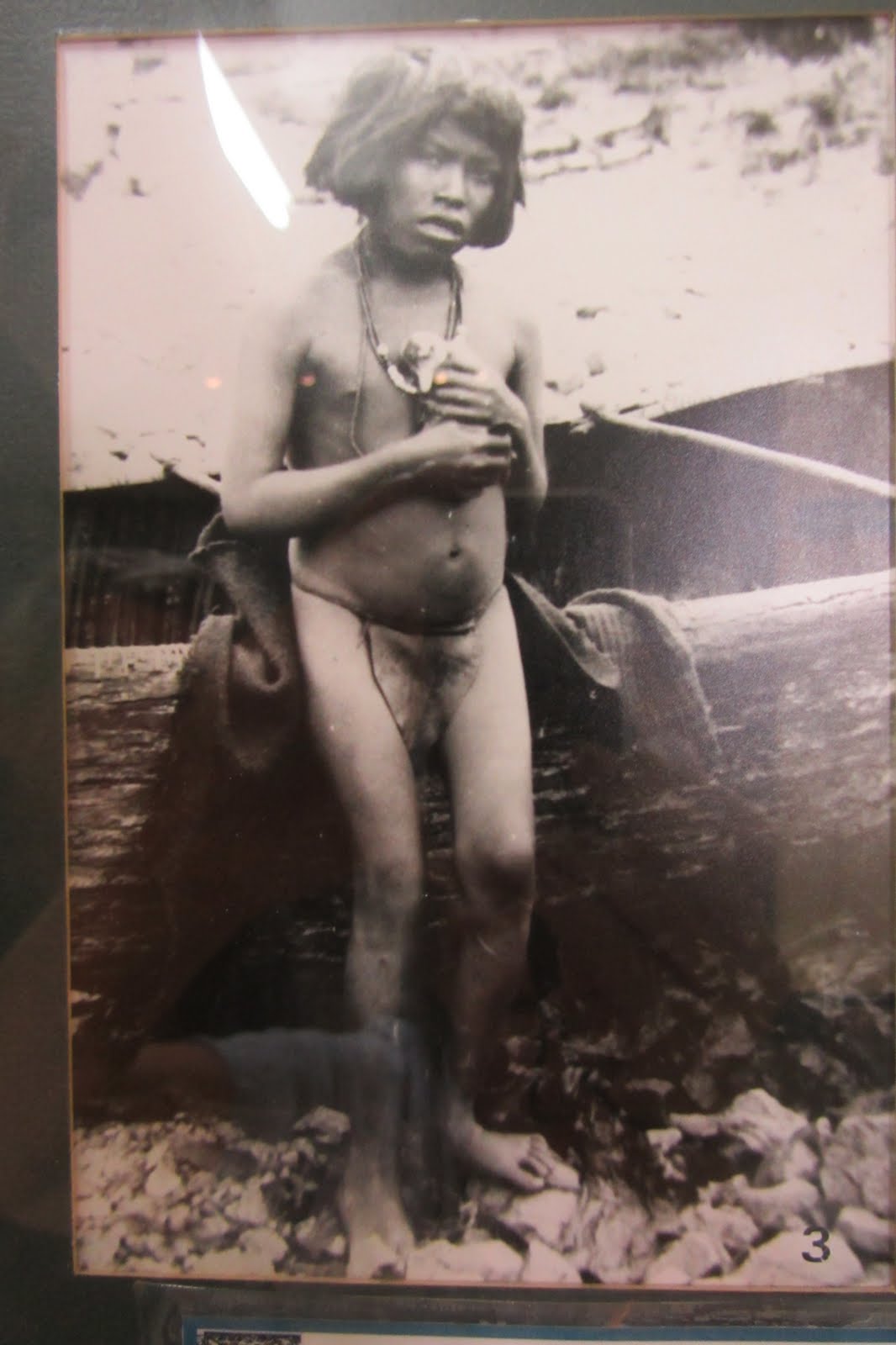
 Tierra del Fuego is without doubt a desolate,raw and bleak place with that pioneering end of the world feeling but despite this, the land has been inhabited for thousand of years. The Qawashqar and Yahgan , both canoe people lived in the channels and subsisted on fishing while the Tehuelche and Selk’nam were land based hunters.


 Various exhibits described the life of the indigenous tribes who inhabited the area before European settlement. Today only a smattering of indigenous people remain in a few remote settlements.

Friday, 18 November 2011

GALAPAGOS

CACTUS FINCH

One of the nine species of Darwin finches evolved to fill different feeding niches on the Galapagos and identified by their distinctive beaks


"from so simple a beginning endless forms most beautiful and most wonderful have been, and are being, evolved"       


Charles Darwin


Cerro Diablo beach, two barren cinder cones connected by a green isthmus bordered by golden sand beaches.


The Galapagos islands lie in the Pacific ocean 1000km to the west of Ecuador. The 7882 square km land mass spread over 50,000 square km of ocean is a volcanic hotspot whose earliest islands were formed 4 - 5 million years ago although other earlier islands are thought to have subsided beneath the sea.  They were discovered by accident in 1535 when Tomas de Berlanga, Bishop of Panama, drifted of course while sailing from Panama to Peru.  It was later used as a base by pirates, sealers and whalers for food, water and firewood and the giant tortoises from whom the name comes were captured in their hundreds to be stored on board alive for up to a year.


 Scientific exploration began in the late 1700's and the archipelago's most famous visitor Charles Darwin arrived in 1835.  He stayed for 5 weeks and made notes and wildlife collections which provided evidence for his theory of evolution.  Ecuador claimed the islands in 1832 and they became a national park in 1959, having been called a laboratory of evolution.


"Nothing would be less inviting than the first appearance.  A broken field of black basaltic lava thrown into the most rugged waves and crossed by great fissures, is everywhere covered by stunted, sunburnt brushwood, which shows little signs of life"

Darwin's first impressions were less than favourable but he soon became engrossed by the variety and complexity of life to be found on these inhospitable islands.  Our week long trip visited a number of them both large and small, all different and many revealing how introduced species and depradations by farming, fishing etc had often resulted in a devastating effect on wildlife.  The first island visited was Isla Seymour, an uplifted lava island which was a breeding ground for magnificent and greater frigate birds and the blue footed booby (so called by sailors because their nests were so easy to rob)


MALE FRIGATE BIRD DISPLAYING DURING BREEDING


                                        FEMALE GREAT FRIGATE BIRD 


JUVENILE FRIGATE BIRD

Swallow tailed gull, sea lions, marine iguanas, lava lizards, lava herons and American cuckoos also breed here and are very easily seen
                      MALE SEA LION OR BEACHMASTER

SEA LION PUP


                                                               MARINE IGUANA


GREAT BLUE HERON


                                                                   LAVA HERON


On Isla Bartoleme we hiked the 340 steps to the summit of the volcanic cone passing spatter cones and solidified streams of different coloured lava. Submerged craters were visible beneath the water, hardy cactus grow on the barren slopes, red spatter cones called hornites (little ovens) and lava tubes festoon the hillside.


The boat held 16 passengers in small but adequate cabins.  The food was good and most sailing was done at night although the sea became quite rough later in the week


Landings by zodiac were either wet (slide over the side and wade ashore) or dry (balance and jump)  by the end, I had become quite adept at getting ashore.


There are 58 resident birds in the Galapagos, 28 of whom are endemic and another 6 are frequent migrants.


The Galapagos penguin is the world’s only tropical (and therefore the most Northerly) penguin. It resembles the Humbolt penguin and owes it’s presence in the Galapagos to the Humbolt current which brings cold water to the islands.

The Waved Albatross is the only albatross which nests in the tropics. Apart from a few pairs on Isla de la Plata, the entire world population of 12000 pairs nests on Espanola.

The waves from which it takes its name can be seen on
the neck of this adult bird


YOUNG WAVED ALBATROSS


There are two species of frigatebird in the galapagos, the magnificent and the great frigatebirds. The magnificent is 107cm long, 5cm longer than the great. The males are difficult to differentiate but the magnificent has a purplish sheen and the great a  greenish sheen on the back. The magnificent female has white underparts, a black throat and a blue eye ring. The great female has white underparts and throat and a red eye ring. Immature birds have white underparts and a white head.


There are three species of boobys in the Galapagos, the Red-footed, the Blue-footed Booby and the Nazca Booby. The latter was previously thought to be a variant of the masked Booby but is now recognized as a separate species which inhabits the Eastern Pacific Ocean including the Galapagos.

 List of birds seen in the Galapagos.
Click on the link to Wikipedia below for further information on each species.
Galapagos Penguin Spheniscus mendiculus
Waved Albatross Phoebastria irrorata
Audubon's Shearwater Puffinus lherminieri

Wedge-rumped Storm-Petrel Oceanodroma tethys
Red-billed Tropicbird Phaethon aethereus

Brown Pelican Pelecanus occidentali
Blue-footed Booby Sula nebouxii
Nazca Booby Sula granti

Magnificent Frigatebird Fregata magnificens

Great Frigatebird Fregata minor
Snowy Egret Egretta thula

Cattle Egret Bubulcus ibis

Lava Heron Butorides sundevalli

Yellow-crowned Night-Heron Nyctanassa violacea
Caribbean Flamingo Phoenicopterus ruber

White-cheeked Pintail Anas bahamensis galapogensis
Galapagos Hawk Buteo galapagoensis

American Oystercatcher Haematopus palliatus
Black-necked Stilt Himantopus mexicanus

Semipalmated Plover Charadrius semipalmatus

Whimbrel Numenius phaeopus
Wandering Tattler Heteroscelus incanus

Sanderling Calidris alba
Least Sandpiper Calidris minutilla

Lava Gull Larus fuliginosus

Swallow-tailed Gull Creagrus furcatus
Galapagos Dove Zenaida galapagoensis

Dark-billed Cuckoo Coccyzus melacoryphus
Galapagos Mockingbird Nesomimus parvulus

Hood Mockingbird Nesomimus macdonaldi
San Cristobal Mockingbird Nesomimus melanotis

Yellow Warbler Dendroica petechia
Ruddy Turnstone Arenaria interpres
Small Ground Finch Geospiza fuliginosa

Common Cactus Finch Geospiza scandens
Large Cactus Finch Geospiza conirostris

Vegetarian Finch Camarhynchus crassirostris


Friday, 4 November 2011

ECUADOR

                                           ECUADOR

                                           ST FRANCIS


Quito, or to give the city it's full title of San Francisco de Quito, at 9184ft above sea level, is the 2nd highest capital city in the world.  It is a long, thin city extending along the eastern side of the Pichincha volcano, 22 miles long and 3 miles wide.  The climate is mild and pleasant rarely exceeding 25oC.  The beautiful historic centre was declared a World Cultural Heritage site by UNESCO in 1978.  The city is known for its treasures of colonial churches, paintings sculptures and carvings. 

                           THE CHURCH OF ST FRANCIS 


                                   THE CHOIR STALLS


 The San Francisco church is the oldest in Quito built in 1536 - 1580 and is the biggest religious complex in the Americas with over 8,670 acres including the convent and six internal patios.  It is built over a pre-Colombian commercial centre - before the Spanish conquest in 1534, the Incas conquored it in the 15th century but destroyed the city rather than accept defeat.

                               THE CONVENT MUSEUM


The Incas spread north from their capital at Cuzco in Peru and their empire spread east into central Argentina and along the Pacific coast from Colomia to Chile absorbing hundreds of indigenous groups and imposing their laws and culture.      

                       VINCENT WITH A CLARIST  NUN


This stall outside the Convent of St Clara was selling Colada Morada, a delicious cherry based drink, as part of the celebrations for the Dia de los Difuntos (Day of the Dead). The purple colour "symbolizes the grief and the blood of those who no longer accompany us". Indigenous communities visit cemetaries taking along favourite food dishes to share with loved ones by their graves.  

                   THE CASA DEL ALABADO MUSEUM


The Casa del Albado museum of pre-Colombian art is housed within a colonial mansion in the Old Town which was built in 1671 making it one of the oldest colonial buildings in the country.  The museum is arranged by themes that focus on pre-Colombian man's concept of the cosmos and constitutes a journey through the ancient spiritual past of the country. 


The amazing ceramics made us want to learn more about the many groups who have occupied the country leaving such treasures in their tombs and ruins over the past 5000 years.  Our first stop was the Rumipamba Archaological Park where traces of a village and extensive road which led from the Andean highlands to the coast can be seen.  Following that we took a taxi to the slopes above the town where a small outdoor museum houses the La Florida burial chambers dating back to 220 - 640AD.  The tombs belong to the Quitus culture and vary in depth from 15 to 17 metres deep and 2 metres in diameter.  Large amounts of ceramics, jewellery and gold were found alongside hundreds of bodies.  The site reflects the cultural beliefs of the Quitus who regarded the  Guagua Pichincha    volcano as their god and whose circular tombs signified bodies being returned to Mother Earth's womb. 


The reproduction of one of the burial chambers containing 16 bodies and ritual objects gives a clear idea of how  the bodies were given back to Mother Earth's womb in the cosmovision of the Quitus culture


The replica of the faces was done through a system of forensic anthropology using the actual skulls.  The spondylus ponchos (shell) worn by important individuals is original


We spent an afternoon at the splendid National Museum of the Central Bank of Ecuador which holds the most complete collection of Ecuadorian art including amazing ceramics dating back to 3500BC and a sample of the vast legacy of pre-Colombian metalwork including gold and silver. (no photos allowed) It makes one wonder how much of this intricately crafted work was melted down to decorate the churches of the occupying armies of Spain

La Compania de Jesus Church


This church of the Society of Jesus is one of the richest churches in the Americas.  Built by Jesuit priests between 1605 and 1765 it is said to contain one and a half tons of gold.  The splendour and wealth of the decoration is unforgetable but it could be considered that the ediface stands as a symbol of the complete subjugation of the indigenous people of Ecuador whose own beliefs and culture were forever changed by the coming of the Europeans.

HACIENDA PORVENIR


Located on the edge of the Cotapaxi national park, the hacienda offered walking and riding.  Sadly, I had contracted a severe virus in the Galapagos and spent the entire 3 days in bed with high fever and severe headache, not helped by the high altitude. The perfect symetrical cone of Cotapaxi is the highest active volcano in the world at 19,347ft.


Our much anticipated two day birding trip to the Mindo cloud forest had to be cancelled due to the illness and we spent a quiet couple of days back in Quito.  I thought that I was hallucinating when we came across an enormous new open top bus passing slowly along the winding cobbled streets of the Old Town.  It was a test drive for a new tourist venture to bring visitors up to the Angel monument high above the city and we were welcomed aboard and took our places on the top deck where we dodged the dangling electric wires and waved at the mystified local population.  


VIEW FROM THE MONUMENT